
Five Architecture and Design Neighbourhoods in Tokyo
Lucas Chirnside, Design Director at BAR Studio, shares insider tips for his favourite design and architecture districts to see in Tokyo, part of our series informed by the team’s travels to project locations around the globe.
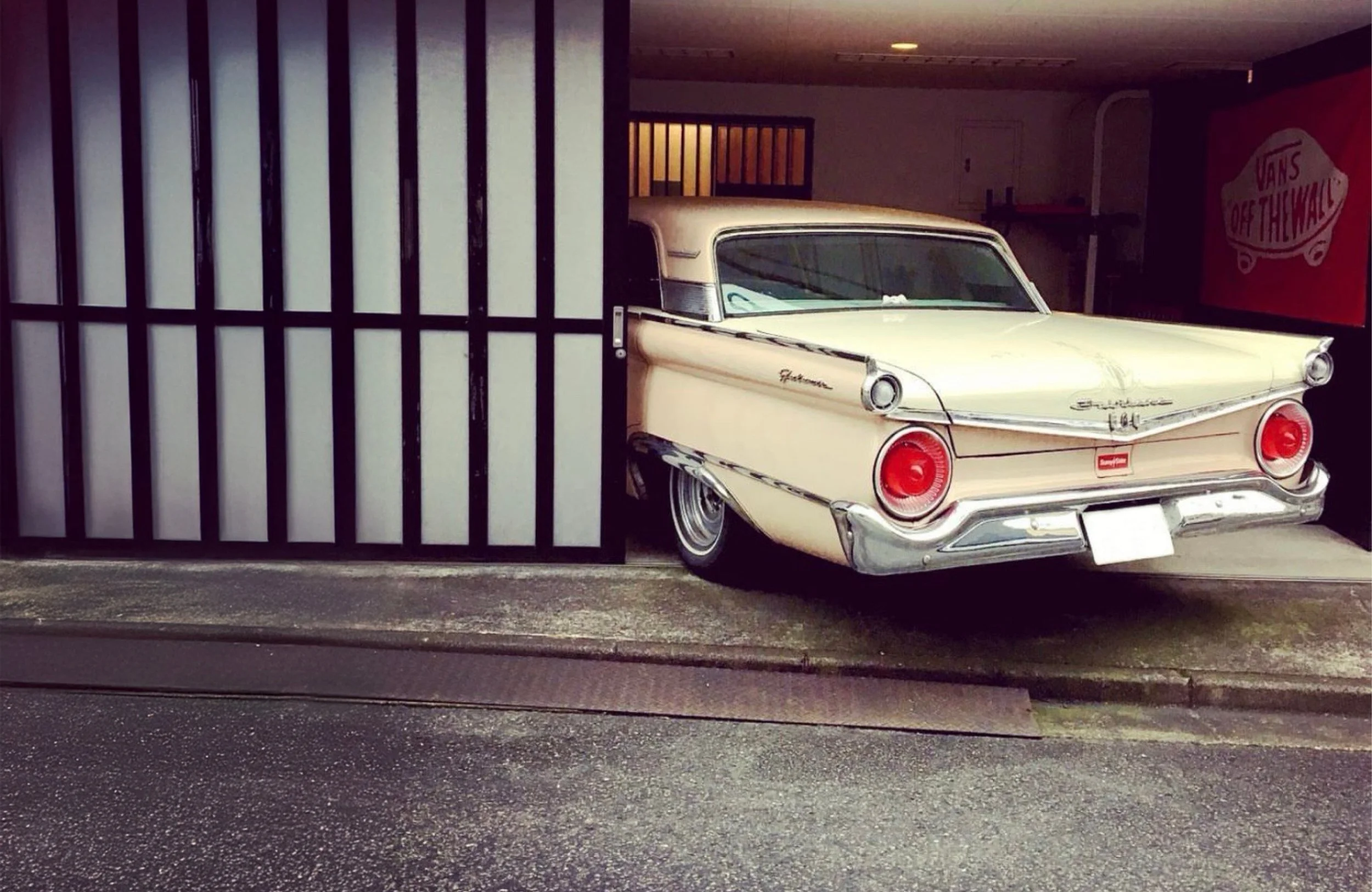
Harajuku streetscape. Photo by Lucas Chirnside.
Japan’s capital is a dynamic city of contrasts where old and new coexist side by side. Lucas has spent time in many of Tokyo’s districts, and finds them endlessly inspiring.
“I think of Tokyo as a huge collection of neighbourhoods jostling next to each other, all linked by an incredible network of people, culture and transport,” says Lucas. “Each neighbourhood is unique and it’s this diversity that for me defines the personality of the city.”
Lucas’s favourite Tokyo escape is to grab a bike and go for a ride – usually in search of food or coffee. “The older parts of Tokyo such as Asakusa and Ueno are great as there is less traffic and lots of interesting streetscapes to explore.” His tip is also to keep an eye on the calendar of traditional celebrations for the many fun local street festivals.
As a bustling international megacity, Tokyo hosts an amazing mix of people brought together under one metaphorical roof.
“In some parts, it feels as if the city itself is one big interior space, and people behave like they are sharing that space. That’s a unique aspect of Tokyo.”
Lucas shares five of his favourite architecture and design neighbourhoods in the city.
1. Azabudai Hills
The Azabudai Hills district opened recently in Tokyo’s Minato City with some beautiful placemaking by Heatherwick Studio showing how architecture, landscape and urban design can be integrated into a seamless experience. This development is also home to the latest iteration of the famous teamLab Borderless immersive digital gallery.
Nearby, well-hidden Nuno fabric store is more like a lab with full-size rolls of stunning handmade contemporary textiles from Design Director Reiko Sudo. Shopping and design, whether contemporary or traditional, flow into one continuous sense of discovery in Tokyo.
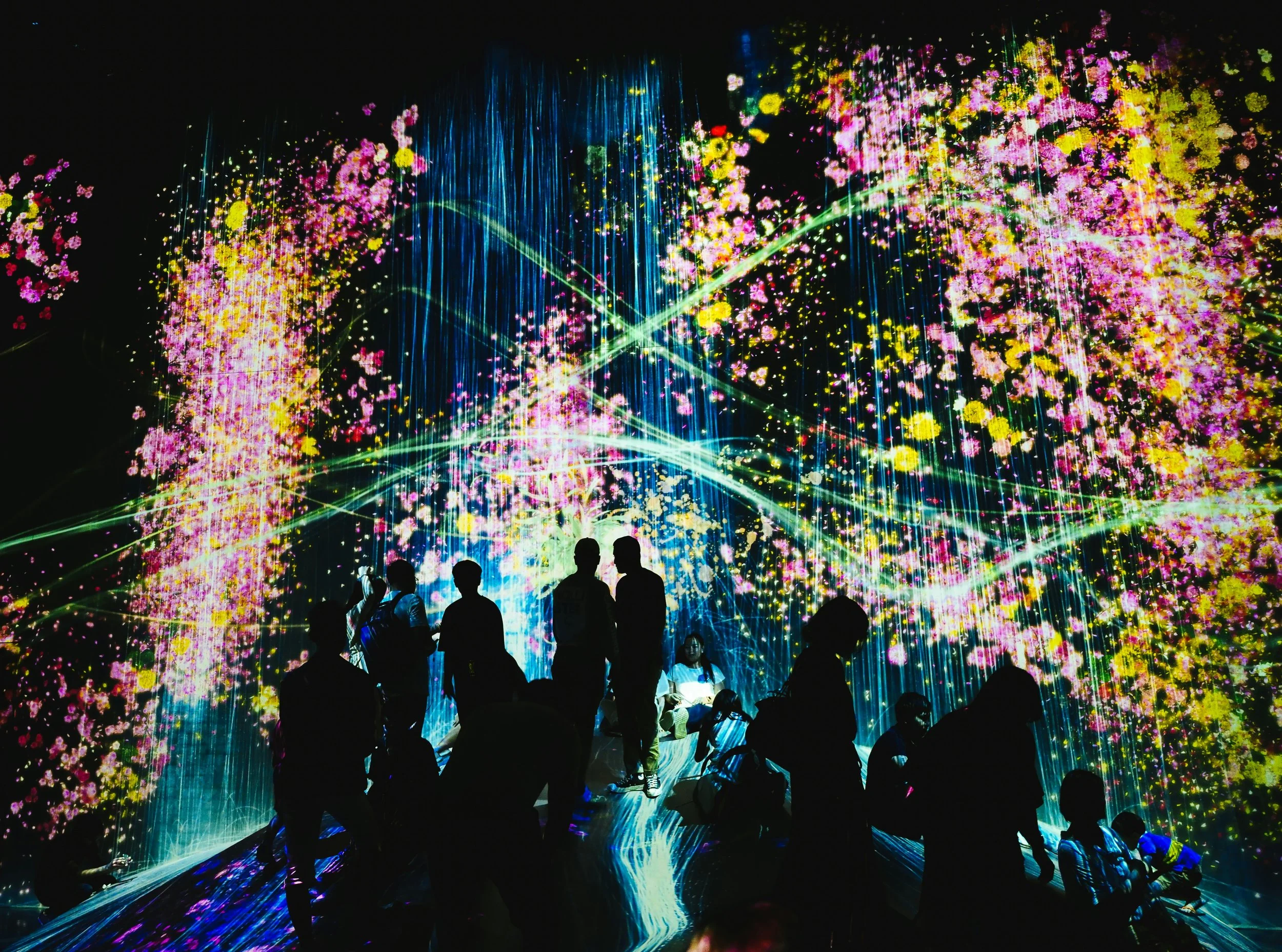
teamLab Borderless. Photo by Cosmin Serban on Unsplash.
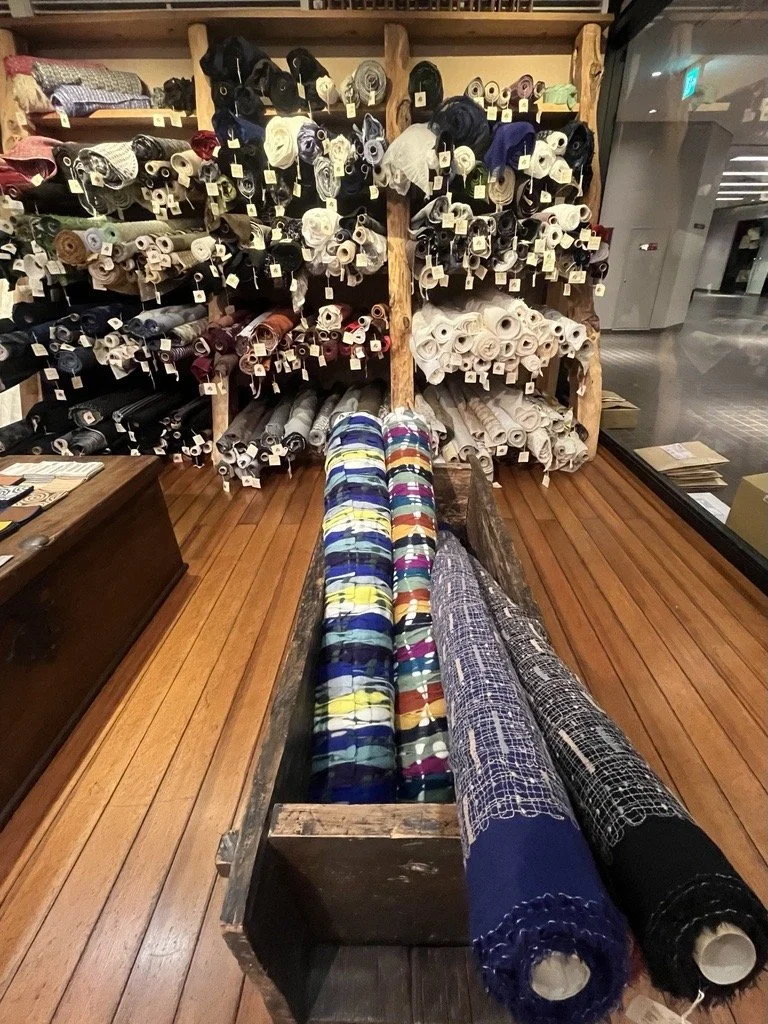
Contemporary textiles at Nuno fabric store. Photo by Lucas Chirnside.
2. Aoyama & Omotesando
Kengo Kuma's Nezu Museum in Minami-Aoyama, home of a diverse collection of Japanese and Asian premodern art, includes NEZUCAFÉ, an elegant contemporary glass-walled café within a traditional Japanese garden. From there you can walk all the way down Omotesando lined with iconic stores. One of the original and best is the Prada store by Herzog & de Meuron. Stroll on through the maze of Harajuku to pop out into the Meiji Jingu forest.
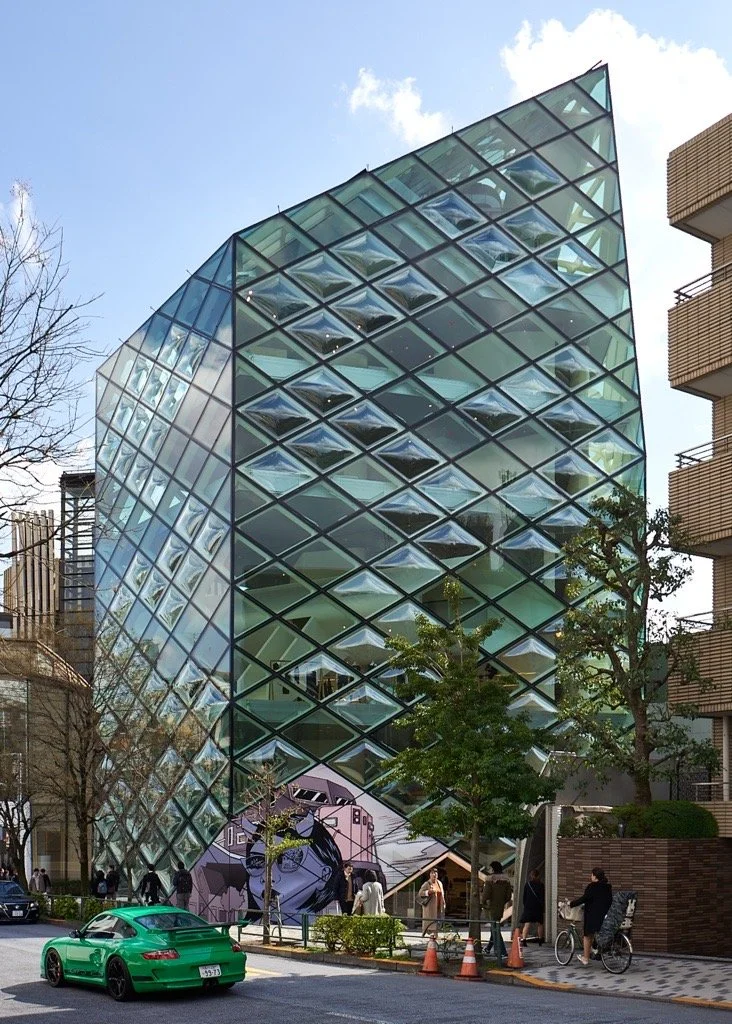
Prada store designed by Herzog & de Meuron. Photo by Peter Bennetts.
3. Shibuya
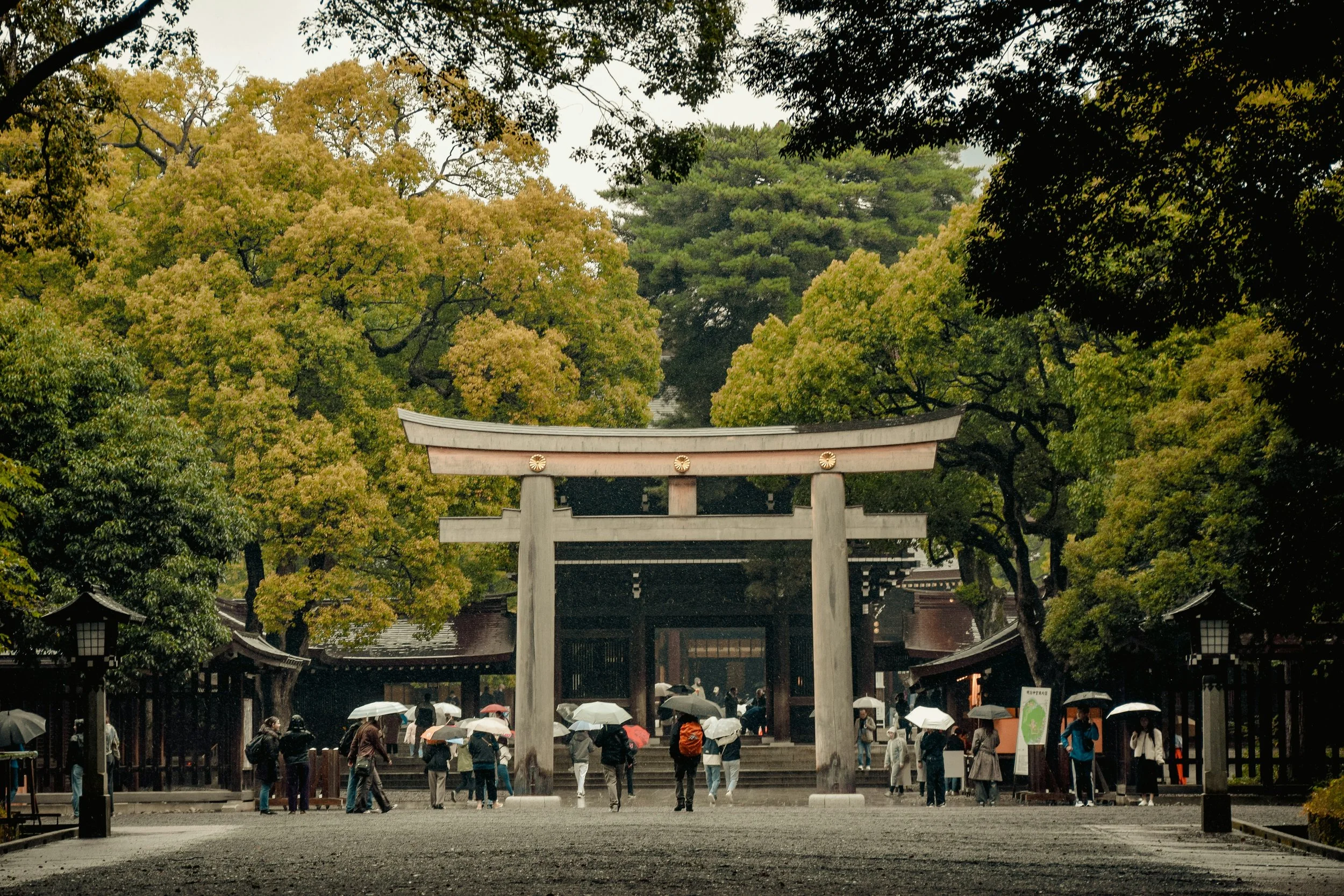
Meiji Jingu Shinto shrine is hidden deep inside a 70-hectare forest of giant ginkgos, oaks and pines in Shibuya in central Tokyo. The long forest walk connecting the main gateway to the shrine creates a unique atmosphere as the city disappears from view. The scale of the trees, and deep cool of the forest, seems to slow down time as you depart the buzz of Tokyo. Along the way is the beautifully layered roofscape of the Meiji Jingu Museum by Kengo Kuma that sits quietly immersed in the forest.
A walk through the adjacent Yoyogi Park in autumn is also tranquil. Cosy Fuglen café is tucked away nearby for a morning caffeine dose or afternoon cocktails. All this calm lies within minutes of buzzy Dogenzaka in the heart of Shibuya.
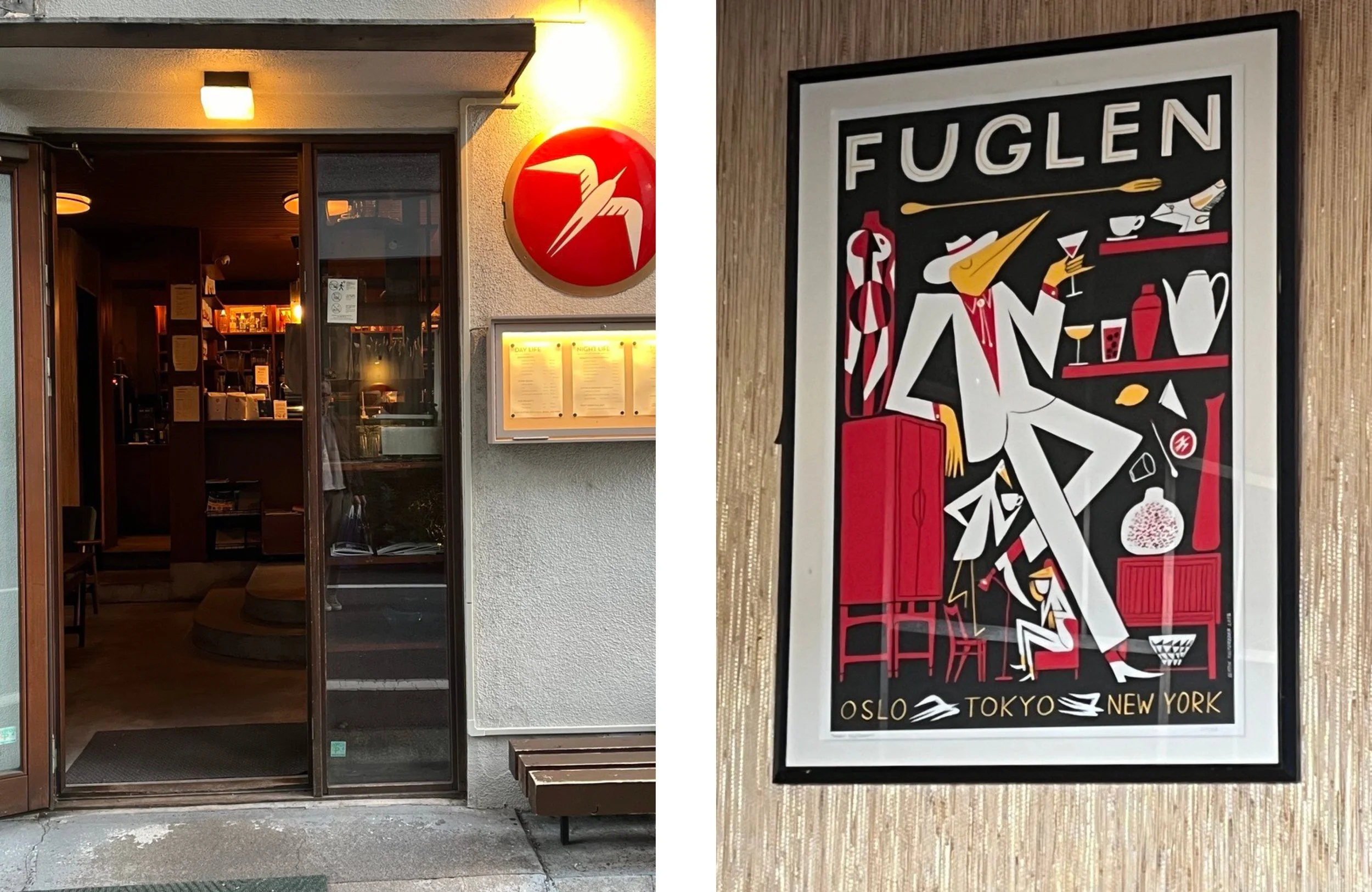
Fuglen café serves coffee and cocktails. Photos by Lucas Chirnside.
4. Daikanyama & Nakameguro
Klein Dytham's T-Site in Daikanyama is the iconic flagship of Tsutaya Books and would take a day to explore fully. Nearby is the Minä Perhonen Materiaali textile showroom of Japanese designer Akira Minagawa. Walk down to the Meguro River, lined with cherry blossoms in April, home to the neighbourhood of Nakameguro to drop in at Cow Books or one of the area’s many other cafés and boutiques.
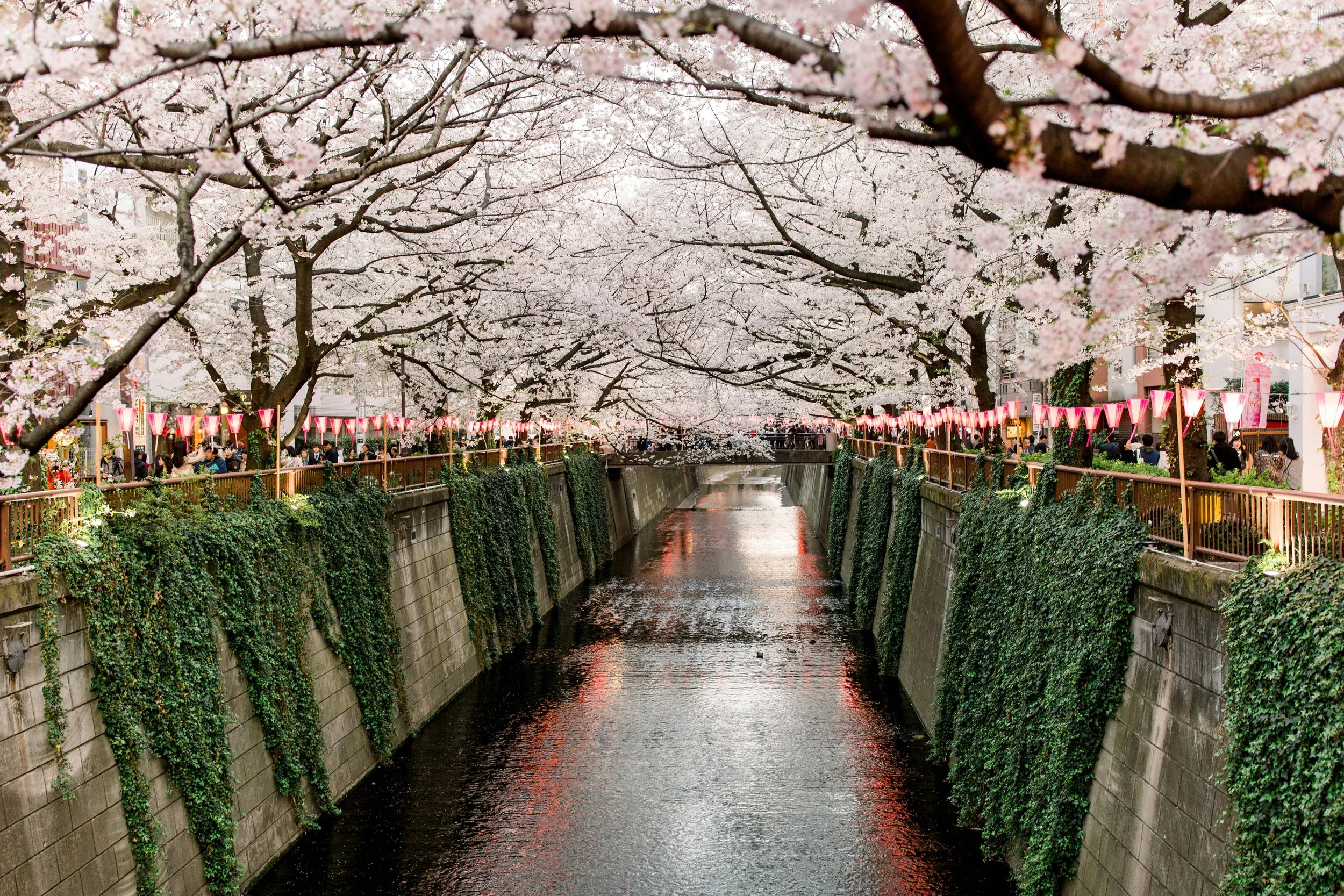
Meguro River. Photo by Jenna Neal on Unsplash.
5. Ginza
Renzo Piano's Maison Hermès in Ginza, with its detailed glass block façade running all the way down to the immaculately clean streets, tempts you to reach out and touch its cool perfection. A short walk takes you worlds away to street dining under the famous Yamanote Line, where trains rumble overhead on antique riveted steel bridges. Around the corner drop into the Imperial Hotel for a drink at the Old Imperial Bar and admire the stone relief featuring Frank Lloyd Wright-designed geometric patterns, and the original terracotta wall behind the bar.

Left: Maison Hermès designed by Renzo Piano Building Workshop. Right: Frank Lloyd Wright-designed stone relief at the Imperial Hotel. Photos by Lucas Chirnside.
EAT & DRINK
Tokyo’s food and drink scene has a fascinating culture of focusing in on details and niche experiences, whether it’s interactive artwork projected through a tea service at teamLab’s En Tea House, high-level sushi with a chef in Ginza, a rustic dinner at Higashi-Yama surrounded by handmade objects by owner and designer Shinichiro Ogata or drinks at Meijiu, a 10m2 listening bar dedicated to analogue hi-fi and fine whisky.

Meijiu listening bar. Photo by Lucas Chirnside.